막시밀리안 모저 - 그라츠 의과대학 생리학 교수, 저자, 오스트리아 바이츠 소재 휴먼 리서치 인스티튜트 소장


2024년 4월 17일
학생들은 곧 있을 일을 기대하며 교실 밖을 호기심 어린 눈으로 내다보고 있었는데, 그때 우리에게는 예상치 못한 일이 벌어졌습니다. 복도에 두 명의 여학생이 나타났는데, 이들은 학교에서 중요한 임무를 맡고 있었습니다. 바로 ‘다툼 중재자’들이었습니다. 그들은 다른 학생과 심하게 다툰 한 여학생을 찾고 있었다.
비록 겨우 열 살이지만, 이미 갈등을 중재하는 방법을 배운 이들은 이제 그 두 말썽꾸러기를 다루기 시작했습니다. 담임 선생님은 이 분쟁 중재자 팀이 어떤 일을 맡으면 매우 성공적이었다고 전했습니다.
펠트키르헨 초등학교는 자신의 일에 열정을 쏟는 여성 교사 팀이 이끌고 있습니다. 2개월 전 사전 협의를 거친 후, 우리는 Software AG의 지원과 Wise on Ice의 크라우드펀딩, 카른텐 스파르카세 사립 재단의 기금을 바탕으로 카른텐 주에서 첫 번째 학교 프로젝트를 시작했습니다.
이 프로젝트를 기록하기 위해 열정적이고 친절한 촬영팀이 우리와 동행했습니다.
소란이 다소 가라앉은 후, 우리는 교실에 들어가 멋진 장비들을 설치했습니다.
나무의 나이테 – 한 그루 나무의 일대기
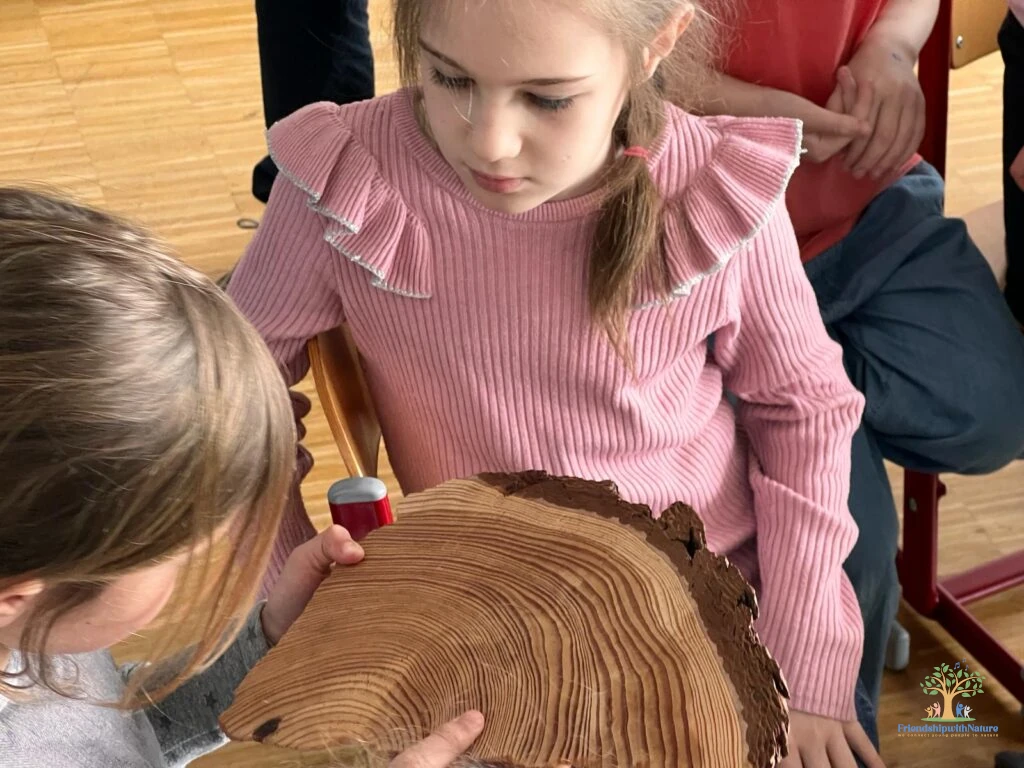
학생들은 원형으로 둘러앉았고, 저는 먼저 제가 가져온 낙엽송 나무의 나무 단면을 통해 그 나무의 일생을 이야기해 주었습니다. 나무의 풍년과 흉년이 뚜렷이 드러났고, 아이들과 대화를 나누며 그 원인이 무엇이었을지 함께 생각해 보았습니다. 학생들은 열정적으로 참여했고, 나중에 회고할 때 이날의 가장 특별한 하이라이트 중 하나였다고 말했습니다.
음악을 연주하는 하얀 난초
그 후, 교실 창가에서 피어 있던 아름다운 흰 난초가 주목을 받았습니다.
학생들의 첫 번째 과제는 식물을 깨끗이 닦는 것이었는데, 아이들은 음악을 들을 생각에 벌써부터 들떠서 정성스럽게 순식간에 작업을 마쳤습니다.
식물이 반짝반짝 깨끗해지자, 우리는 TreeMuse의 전극을 부착했고, 학생들은 이제 어떤 음악이 흘러나올지 큰 기대감으로 기다렸습니다. 첫 소리가 울려 퍼지자, 학생들은 큰 열광과 놀라움을 감추지 못했습니다. 실제로 식물은 아주 훌륭하게 연주를 해냈고, 학생들은 깊은 감명을 받았습니다.
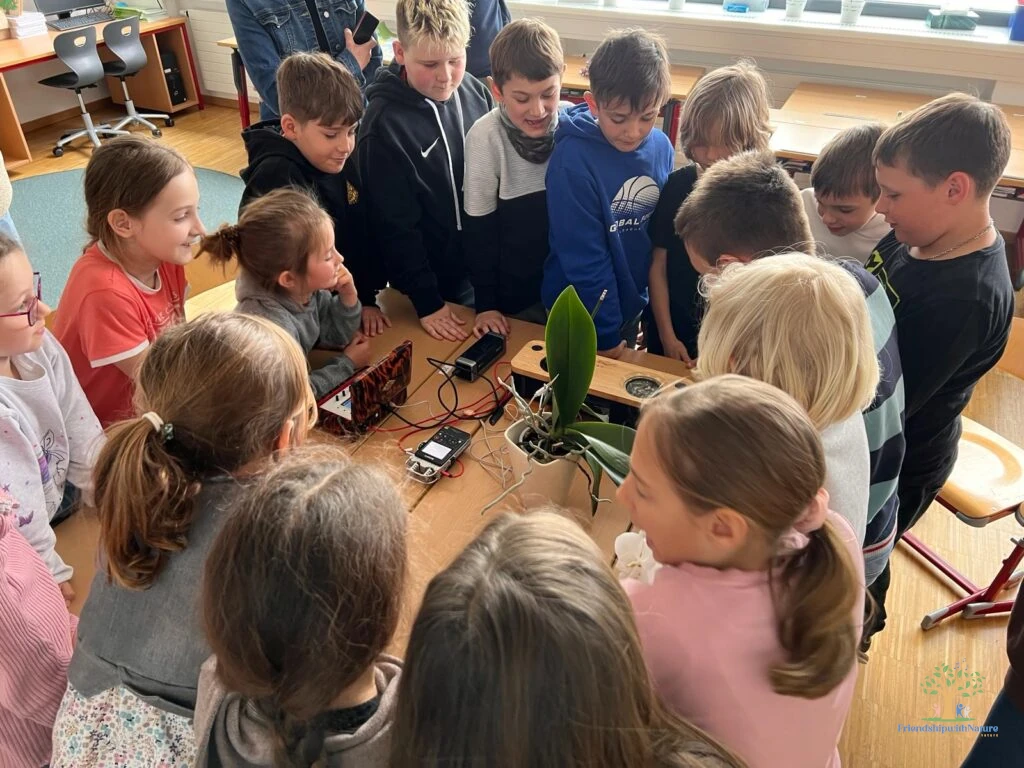
나중에 돌이켜보며, 맥스라는 상큼하고 씩씩한 한 학생은 처음에는 모든 게 완전한 가짜라고 생각했지만, 식물이 음악을 연주하는 모습을 보고 전극을 떼자마자 연주가 즉시 멈추는 것을 확인한 후, 우리가 정말로 진짜 식물 음악을 재생하고 있다는 사실을 확신하게 되었다고 말했습니다.
식물 음악이 만들어내는 형태
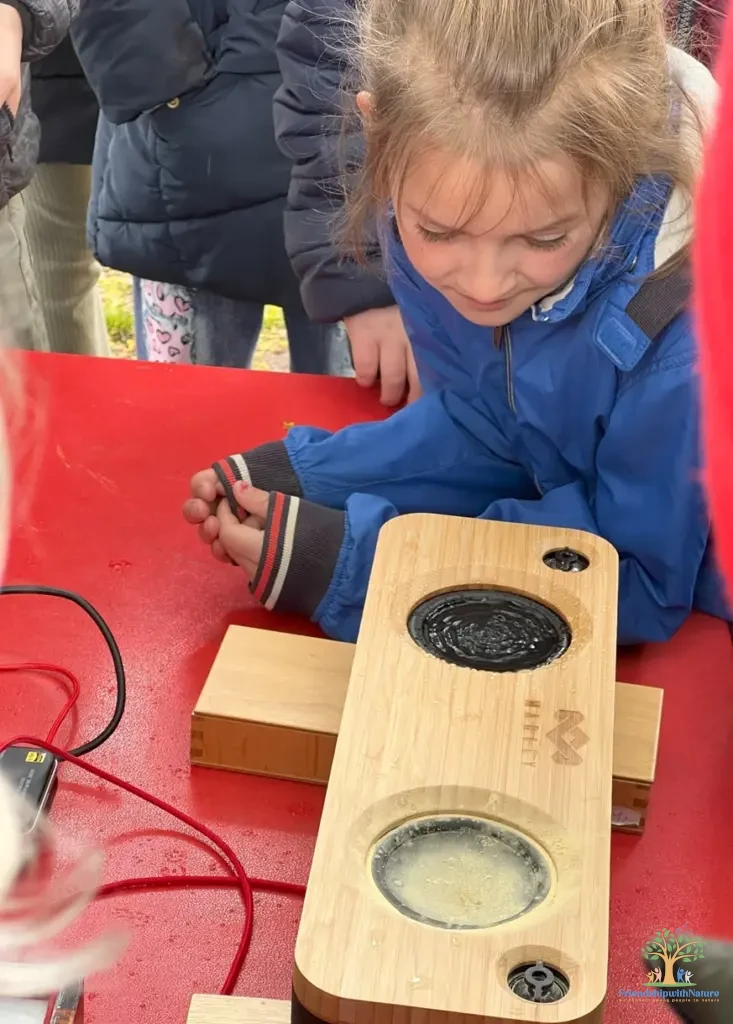
이제 프로젝트에서 가장 흥미진진한 부분인, 키마틱(kyma = 그리스어: 파동) 도형을 이용한 식물 음악의 시각화가 시작되었습니다. 키마틱 접시 중 하나에 리코포디움 포자를 채웠더니, 음악에 맞춰 프랙탈 구조로 배열되기 시작했습니다.
다른 작은 그릇에는 물을 채웠습니다. 학생들은 그릇에 재료를 채울 기회를 얻기 위해 서로 앞다퉈 나섰습니다. 학생들은 한동안 이 작업에 몰두하며, 매료된 듯 식물의 움직임을 귀 기울여 듣고 지켜보았습니다.
그 후 저는 우리 인간도 그룹 내에서 그런 리듬을 만들어낼 수 있음을 보여주었고, 학생들은 먼저 서로 손을 잡은 뒤, 그 손의 원 안에 식물을 안았습니다. 학생들의 움직임이 가라앉자마자, 원 전체가 음악을 연주하기 시작했고, 이 그룹에서 키마틱 도형들이 생겨났습니다.
나무도 음악을 연주할 수 있을까?
그때 한 여학생이 나무도 음악을 연주할 수 있는지 물었고, 우리는 야외 놀이터로 나갔습니다. 그곳에는 아름다운 오래된 단풍나무 한 그루가 서 있었는데, 우리는 그 나무에 전극을 부착했습니다. 이제 이 나무도 소리를 낼 수 있을지 기대감이 감돌았고, 과연—난초 때보다 훨씬 더 웅장한 음악이 울려 퍼졌습니다.
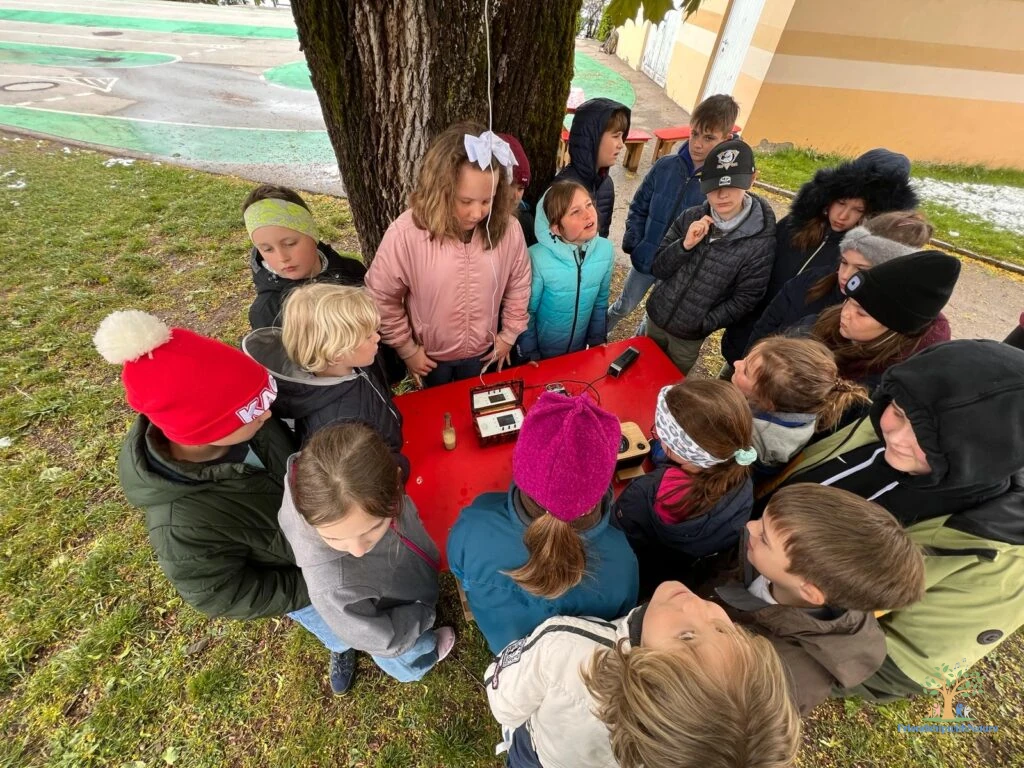
학생들이 한동안 실험을 해본 후, 점점 더 실험에 열의를 보이며 (밤새 눈이 내렸던) 눈을 키마틱 판 위에 올려도 되냐고 물었고, 제가 허락하자 모두들 열광했습니다.
그 후에는 작은 돌멩이들을 올려놓았는데, 돌멩이들이 사방으로 펄쩍펄쩍 튀어 올랐고, 몇몇 여학생들은 이것이 전체 프로젝트 중 가장 흥미진진한 부분이었다고 말했습니다.
체험 내용 정리하기
추위가 아이들에게 조금 버거워 보였기에, 우리는 다시 교실로 돌아갔습니다. 그곳에서 학생들은 마무리 토론 시간을 통해 자신의 경험을 이야기하며, 이제 식물을 훨씬 더 깊이 있게 체험하게 되었고 식물이 가진 능력에 정말 놀랐다고 표현했습니다.
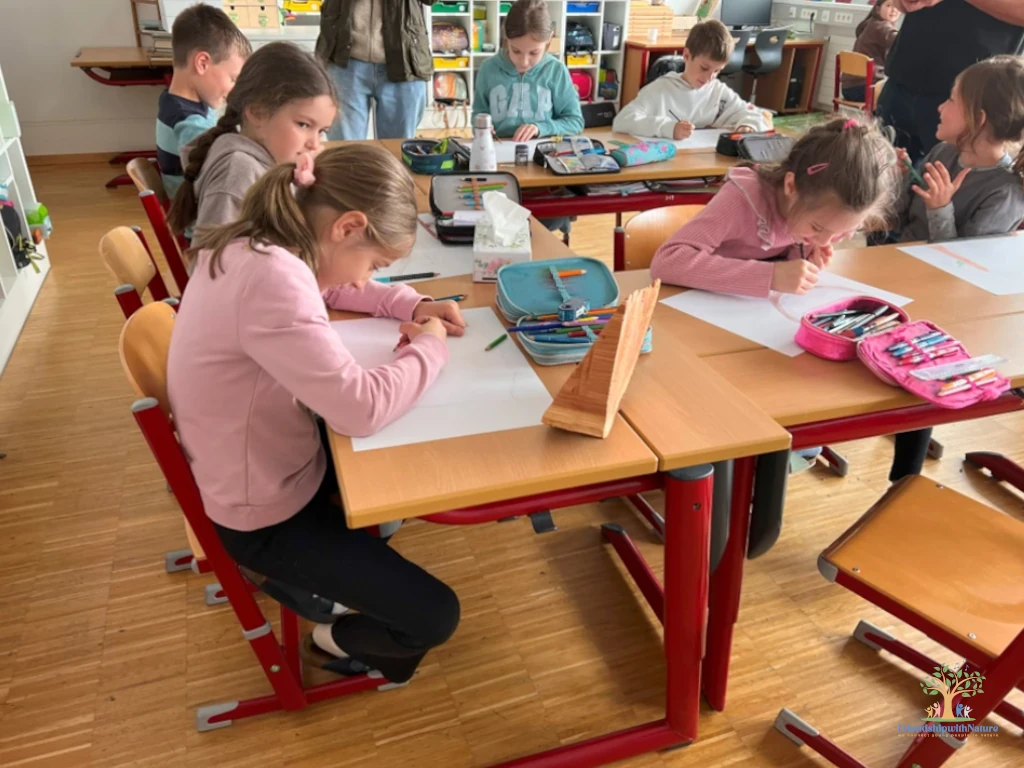
촬영팀은 이 프로젝트가 다큐멘터리 제작에 안성맞춤이라고 말하며, 오스트리아의 주요 TV 방송사에 다큐멘터리 제작이 가능한지 문의해 보겠다고 약속했습니다.
이미 제작된 영상을 보시려면 여기를 클릭해 주세요:
감동적인 하루가 저물었고, 아이들은 분명 평생 이 학교 생활을 기억할 것입니다!
후원사 여러분께 감사드립니다:

SAGST 재단

카른텐 스파르카세 사립 재단

Wise on Ice
로고: